Age diversity is one of the most overlooked competitive advantages in business. Each generation brings something unique to the table, and when those strengths come together, your team becomes more adaptable, creative, and resilient. However, synergy doesn’t always come naturally, and you’ll likely have to build systems and structures that support generational diversity in the workplace, which allow everyone to thrive.
In this guide, we’ll walk you through what your business stands to gain by making generational diversity in the workplace a priority, what each generation wants, and how to ensure team members of all ages feel supported and collaborate well.
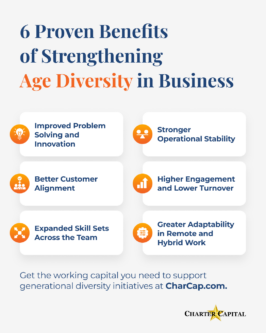
Benefits of Strengthening Age Diversity in Business
Companies with diverse teams tend to outperform their peers financially, according to McKinsey. This is often attributed to better problem-solving. When you bring employees together who grew up in different eras, with different technologies and economic environments, they naturally approach challenges in unique ways.
Moreover, teams with age diversity tend to avoid groupthink and generate more practical solutions, especially when dealing with customers from a broad range of age groups.
Stronger Operational Stability
Age-diverse teams help steady your business during periods of change. For example, younger employees often adapt quickly to new software, communication tools, or automation. Meanwhile, experienced employees provide historical context and protect institutional knowledge, preventing mistakes from recurring. This combination creates smoother transitions when you adopt new systems or adjust operations to meet customer demand.
Better Customer Alignment
In the United States, consumers span every generation from Gen Z through the Silent Generation. When your team reflects this range, you can anticipate customer preferences more accurately. Younger employees tend to spot emerging trends earlier, while seasoned employees may understand long-term customer expectations more deeply. This blend helps you build products, services, and messaging that resonate with a wider portion of the market.
Higher Engagement and Lower Turnover
Engagement rises when employees feel their perspective is valued and when they have opportunities to grow, according to Gallup research. Age diversity supports this by ensuring voices across the team are heard and respected. Businesses with age-diverse teams often see lower turnover because employees feel they contribute something unique. Because replacing employees can be costly and time-consuming, keeping turnover to a minimum is essential, especially for smaller businesses.
Expanded Skill Sets Across the Team
Every generation learns through different technologies, training styles, and workplace norms. When you bring them together, you create an environment where employees cross-train one another naturally. This often shows up in two ways:
Adaptation: Younger employees introduce digital shortcuts, automation, and efficiency tools.
Experience: Experienced employees improve critical thinking, conflict resolution, and higher-stakes decision-making across the team.
The result is a more capable workforce without increasing your headcount.
Greater Adaptability in Remote and Hybrid Work
As remote and hybrid work become more common, your team needs a balance of digital fluency, self-management skills, and long-term experience working through ambiguity. Age diversity helps fill these gaps.
Younger employees may excel in multi-platform communication and asynchronous teamwork. Experienced employees may bring clearer boundaries, stronger organizational habits, and better judgment during high-pressure situations. Together, they help your remote or hybrid culture stay balanced and productive.
Honoring Differences is Essential to Effective Multigenerational Workforce Management
Clearly, strengthening age diversity gives your business a strategic advantage, but it is just as important to understand that each age group brings its own set of expectations, communication styles, and work habits. These differences shape how people approach tasks, interpret instructions, and collaborate. When you recognize these distinctions and manage them intentionally, your business gains smoother operations and stronger team performance.
Clearer Communication Across the Team
Every generation grew up with different communication norms. Some employees learned through face-to-face discussion, while others were educated through digital communication from an early age. These experiences create patterns in how people interpret messages at work.
Better Management Decisions
Your leadership choices have different effects depending on the age groups within your team. For example, training preferences vary significantly across generations. Some employees look for structured guidance and proven processes, while others learn more effectively by experimenting and iterating.
Stronger Collaboration and Less Conflict
Generational traits are shaped by economic conditions, technology, and cultural events that influence how people solve problems. These forces create different expectations around autonomy, feedback, deadlines, and conflict resolution.
More Consistent Performance in Remote and Hybrid Work
Remote and hybrid environments magnify generational distinctions. Some employees may be comfortable switching between multiple communication platforms, while others prefer direct, linear task structures. Certain employees may need more frequent check-ins, while others perform best when you give them space to work independently.
Greater Employee Satisfaction and Trust
Employees feel respected when you understand what motivates them and how they prefer to work. This is especially important for small and mid-sized businesses where culture plays a significant role in retention.
Stronger Alignment Around Business Goals
Your employees may share the same goals but prefer different paths to get there. When you are intentional about bridging generational differences, you create a shared language for performance. This helps your team stay aligned, even when individual working styles vary.
Defining Traits Across Generations
While there are no steadfast rules because each person is unique, people often share traits, behaviors, and preferences based on the events and environments they’ve experienced as they’ve aged. Familiarizing yourself with these aspects makes it easier to connect with each group and support generational diversity in the workplace as a whole.
Traits of Baby Boomers (Born 1946–1964)
Baby Boomers bring experience, stability, and historical context to your business. Many delayed retirement or returned to the workforce, which means they often hold deep institutional knowledge and long-term customer insight.
Baby Boomer Workplace Expectations, Values, and Beliefs
Baby Boomers were shaped by a period of economic growth, strong social change, and traditional career paths. They tend to value reliability, hard work, and contributing to something meaningful. Many take pride in being dependable and consistent.
Communication Styles of Baby Boomers
Baby Boomers often prefer clear, direct communication. They tend to respond well to structured conversations, written documentation, and scheduled meetings. In remote or hybrid settings, they appreciate stability in communication tools and expectations.
Baby Boomer Work Habits and Motivations
Baby Boomers usually rely on established routines and steady workflows. They are motivated by quality output, accountability, and recognition of their experience. Common drivers include:
Meaningful Responsibilities: They stay engaged when their expertise has clear value within the team.
Predictable Processes: Baby Boomers perform well when expectations are defined and consistent.
Visible Impact: They appreciate roles where they can see the results of their contributions.
Learning and Development Preferences of Baby Boomers
Baby Boomers tend to prefer structured learning with clear guidance. They benefit from hands-on demonstrations, written materials, and opportunities to ask questions. Many also enjoy sharing their knowledge through peer learning or mentorship.
Technological Proficiency of Baby Boomers
Skill levels vary, but most Baby Boomers adapt well when technology is introduced gradually and explained clearly. They appreciate systems that are intuitive and supported by practical training materials.
Adaptability and Change Response in Baby Boomers
Baby Boomers have experienced repeated workplace shifts, which gives them a steady understanding of change. They adapt best when they know the purpose of a change and how it affects the business.
Leadership and Collaboration Tendencies in Baby Boomers
Baby Boomers often lead through consistency and fairness. They value relationship-building, collaborative problem-solving, and clear accountability. Their leadership style tends to emphasize responsibility and follow-through.
Career Expectations and Job Tenure Trends for Baby Boomers
Baby Boomers generally value stability and long-term commitment. They often stay with employers who show appreciation, maintain clear expectations, and offer roles where experience is valued.
Traits of Gen X (Born 1965–1980)
Generation X grew up during economic shifts, evolving technology, and changing family dynamics. Many became self-reliant early, which shows up in their work style. In small and mid-sized businesses, they are often the stabilizers who bridge older and younger employees while taking on core operational responsibilities.
Gen X Workplace Expectations, Values, and Beliefs
Generation X tends to value independence, flexibility, and practical problem-solving. They often believe in earning trust through action and appreciate workplaces that reward efficiency and results. Stability matters to them, but so does autonomy.
Communication Styles of Generation X
Members of Generation X usually prefer clear, concise communication. They are comfortable with both digital and traditional communication channels and often adjust based on what the situation requires. They appreciate straightforward conversations and tend to avoid unnecessary formality.
Gen X Work Habits and Motivations
Generation X is known for being resourceful and adaptable. They are motivated by opportunities to solve complex problems and work with minimal oversight. Common drivers include:
Autonomy in Daily Tasks: They engage more deeply when trusted to manage their own work.
Efficient Processes: They appreciate systems that save time and reduce unnecessary steps.
Pathways for Growth: They remain committed when they see a clear future in the business.
Learning and Development Preferences of Generation X
Generation X usually prefers learning that is practical and self-directed. They respond well to training that helps them solve immediate problems or improve efficiency. Many enjoy mixing independent learning with opportunities to consult an expert when needed.
Technological Proficiency of Generation X
Generation X experienced the transition from analog to digital technology, which gives them a balanced perspective. They tend to adopt new tools easily when those tools have a clear purpose and improve their work experience.
Adaptability and Change Response in Generation X
Generation X tends to adapt quickly because they are used to navigating change. They often lead the adoption of new processes or tools when the benefits are clear. They appreciate transparency around decisions that affect their workload.
Leadership and Collaboration Tendencies in Generation X
Generation X leaders often promote accountability, efficiency, and flexibility. They encourage open dialogue and tend to avoid micromanagement. As collaborators, they appreciate balanced contributions and practical solutions.
Career Expectations and Job Tenure Trends for Generation X
Generation X values stable workplaces that respect their independence. They often stay with employers who offer flexibility, opportunities for growth, and a clear connection between effort and reward.
Baby Boomer vs. Generation X Work Styles
Baby Boomers and Generation X often take different approaches to daily work. Baby Boomers lean toward structured routines and steady, predictable workflows, while Generation X tends to prefer autonomy and efficiency-driven approaches. These differences reflect the workplace norms each group encountered early in their careers.
Traits of Millennials, aka Gen Y (Born 1981–1996)
Millennials make up the largest share of today’s U.S. workforce, according to the U.S. Department of Labor. Your business likely relies on them for operational strength, digital fluency, and adaptability. They entered the workforce during rapid technological change and several economic disruptions, which shaped their views on stability, purpose, and career growth.
Millennial Workplace Expectations, Values, and Beliefs
Millennials often value meaningful work, ongoing development, and workplaces that prioritize transparency. They tend to believe that strong culture and shared purpose drive performance. Flexibility is important to them, as many built careers during times of economic uncertainty.
Communication Styles of Millennials
Millennials typically communicate in a direct but informal manner. They are comfortable with digital platforms, quick updates, and real-time messaging. While they appreciate efficiency, they still value thoughtful feedback and open dialogue when discussing performance or expectations.
Millennial Work Habits and Motivations
Millennials are often collaborative, tech-savvy, and motivated by opportunities to learn. They appreciate environments where teamwork is encouraged and where they can contribute ideas openly. Common motivators include:
Opportunities for Skill Growth: They engage more deeply when they are learning regularly.
Clear Expectations: They perform well when goals and responsibilities are transparent.
Flexible Work Options: Remote or hybrid structures often help them maintain balance and stay productive.
Learning and Development Preferences of Millennials
Millennials tend to prefer blended learning methods that combine digital resources, hands-on practice, and on-demand training. They appreciate programs that help them build long-term skills and advance in their careers. Continuous learning is a core expectation for many.
Technological Proficiency of Millennials
Millennials are highly comfortable with technology and often serve as early adopters. They can navigate new tools quickly, especially when those tools streamline processes or support collaboration. They tend to expect modern, intuitive systems in the workplace.
Adaptability and Change Response in Millennials
Millennials generally adapt well to change because they have spent most of their careers in shifting environments. They respond positively when leaders explain how changes support growth, team success, or customer value.
Leadership and Collaboration Tendencies in Millennials
Millennials often lead with a collaborative and inclusive style. They value feedback, shared decision-making, and open communication. As teammates, they appreciate environments where ideas can be exchanged freely and where contributions are recognized.
Career Expectations and Job Tenure Trends for Millennials
Millennials often seek roles with advancement potential and ongoing development. They remain committed when they see a future with the business and when they feel the workplace supports both performance and well-being. Career growth and transparency influence their long-term retention.
Generation X vs. Millennial Work Styles
Generation X and Millennials share adaptability, but their day-to-day styles grew from different environments. Generation X often focuses on independence and streamlined processes, whereas Millennials are more inclined toward teamwork, shared input, and open communication. These distinctions influence how each group participates in projects and decision-making.
Traits of Gen Z, aka iGen (Born 1997–2010)
Generation Z is the first fully digital generation in the U.S. workforce. They began working during a time shaped by economic swings, global uncertainty, and rapid technological expansion. For many small and mid-sized businesses, they bring fresh ideas, tech agility, and a strong desire for meaningful, modern work environments.
Gen Z Workplace Expectations, Values, and Beliefs
Generation Z tends to value authenticity, ethical leadership, and workplaces that align actions with stated values. They often believe that career growth and personal well-being should coexist. Stability matters to them, but so does the ability to adapt as roles and industries evolve.
Communication Styles of Generation Z
Generation Z is comfortable with fast communication, digital platforms, and real-time updates. They appreciate clarity and directness but often prefer concise messaging. While they are fluent in digital tools, they still value face-to-face communication for complex discussions or feedback.
Gen Z Work Habits and Motivations
Generation Z tends to be highly adaptable and curious. They are motivated by opportunities to use technology creatively and by roles that give them room to grow. Common drivers include:
Skill Development: They stay engaged when they can build tangible, future-focused skills.
Clear and Timely Feedback: They appreciate feedback that helps them course-correct quickly.
Modern Work Structures: Remote or hybrid options often fit their comfort with digital collaboration.
Learning and Development Preferences of Generation Z
Generation Z prefers learning that is interactive, digital, and connected to real-world outcomes. They tend to respond well to short, targeted training, video-based content, and tools that allow them to learn on demand. They appreciate development pathways that show how new skills lead to advancement.
Technological Proficiency of Generation Z
Generation Z is highly proficient with technology and usually adapts faster than other generations. They expect tools to work smoothly and appreciate systems that allow for speed, collaboration, and flexibility. They often identify inefficiencies quickly.
Adaptability and Change Response in Generation Z
Generation Z is used to rapid change and usually shifts gears quickly. They adjust well when they can see the purpose behind a change and when leaders provide clarity about expectations and impact.
Leadership and Collaboration Tendencies in Generation Z
Generation Z leaders often emphasize inclusivity and shared problem-solving. They value transparency and open communication. As collaborators, they appreciate workplaces where ideas are welcomed and where communication flows easily across the team.
Career Expectations and Job Tenure Trends for Generation Z
Generation Z tends to look for roles that offer growth, support well-being, and align with their long-term goals. They remain committed when they see progression, meaningful responsibilities, and leaders who invest in their development.
Millennial vs. Gen Z Work Styles
Millennials and Generation Z both bring strong digital comfort, yet their work styles show clear generational shifts. Millennials typically look for collaborative structure and transparent guidance, while Generation Z tends to work with more speed and prefers concise updates. These patterns reflect the differing technologies and economic conditions that shaped their early experiences at work.
Strategies to Improve Cross-Generational Collaboration
Generational differences can create friction in communication and teamwork, but these challenges can be managed effectively when you set shared expectations and build intentional habits across your business. Employees won’t all work the same way, but you can create communication patterns and collaborative norms that keep generational communication at work smooth. Let’s take a look at how to make this happen.
Create Clear Communication Standards
Many teams struggle because communication styles vary widely across generations. Baby Boomers often look for structured updates, Generation X prefers concise direction, Millennials value open dialogue, and Generation Z expects quick clarity.
You can manage this by setting simple standards for how and when your team communicates. Shared guidelines reduce friction and make collaboration easier across remote, hybrid, and on-site roles. Examples include:
Standard Channels for Key Topics: Use one platform for announcements, another for quick questions, and another for project updates.
Defined Response Expectations: Let your team know when immediate replies are needed and when asynchronous updates are acceptable.
Written Summaries After Meetings: This keeps everyone aligned regardless of generation or communication preference.
Provide Context When Introducing New Ideas
Each generation processes information differently. Baby Boomers often want the background and purpose, while younger generations may prefer direct, actionable points. You can bridge this gap by offering both. Give a brief explanation of why something matters, then shift to what needs to happen next. This helps your team move forward together with fewer misunderstandings.
Use Each Generation’s Strengths in Collaboration
Every generation brings something distinct to the table. Baby Boomers offer experience. Generation X provides resourcefulness. Millennials excel at teamwork. Generation Z brings digital fluency. You can support stronger collaboration by matching strengths to project needs and encouraging cross-generational pairing. This includes:
Reverse Mentorship: Younger employees share digital shortcuts while experienced employees share insights that protect against repeat mistakes.
Role-Based Collaboration: Assign responsibilities based on strengths rather than age or tenure.
Mixed-Generation Project Teams: This balances efficiency, creativity, and experience.
Set Expectations for Feedback and Conflict Resolution
Generations often interpret feedback differently. Some prefer scheduled, formal conversations. Others want quick check-ins and real-time comments. You can prevent tension by stating clearly how feedback is given in your business and how disagreements are addressed. Successful approaches include:
Shared Feedback Frameworks: Use one process for giving and receiving feedback so everyone understands the format.
Regular Check-In Times: This creates predictability and avoids confusion about when conversations will happen.
Clear Steps for Resolving Issues: Employees know where to go and what to expect when challenges arise.
Adapt Communication Formats to Fit the Message
Not every topic requires the same medium. Some discussions are better in writing, while others need a conversation. You can improve collaboration by choosing formats intentionally. Examples include:
Written Instructions for Complex Tasks: This helps employees who want clarity without repeated explanations.
Short Meetings for Decisions: This works well for generations that prefer direct action.
Recorded Walkthroughs for Training: Walkthroughs help younger employees learn quickly while giving older employees something they can revisit.
Create Space for Every Voice
Generational differences can impact who speaks up during meetings. Your experienced employees may lead conversations, while newer employees may hold back. You can create balance by making space for a variety of voices. A few ways to achieve this include:
Round-Robin Input: Everyone contributes once before anyone contributes twice.
Anonymous Idea Submission: Helps quieter employees participate without pressure.
Designated Roles in Meetings: Facilitators, note takers, and timekeepers rotate across generations.
Additional Tips for Managing Generational Differences
Once you address communication and collaboration, the next step is to strengthen the systems and expectations that guide day-to-day work. These areas influence performance, morale, and long-term retention across all age groups.
Set Clear Expectations Around Workflows and Deadlines
Generations vary in how they approach structure. Some rely on routine, while others prefer flexibility. You can prevent confusion by creating baseline expectations that apply consistently across your team. This includes how to prioritize tasks, how to request support, and how deadlines are communicated.
Establish a Fair and Transparent Approach to Flexibility
Flexibility does not look the same to each generation. Some appreciate remote work, others value predictable schedules. You can maintain fairness by setting the same rules for everyone and communicating how flexibility decisions are made. This helps you avoid misunderstandings about who receives accommodations and why.
Tailor Motivation and Recognition Strategies
Employees are motivated by different factors. Some value public recognition, others appreciate private feedback or development opportunities. You can create a balanced system by offering several recognition formats and allowing employees to choose what feels meaningful. A simple preference survey can guide your approach.
Build Training Programs That Reach Multiple Learning Styles
Generations differ in how they learn, but every group benefits from variety. You can improve adoption of new tools and processes by mixing written guides, short videos, hands-on practice, and opportunities to ask questions. This creates a shared learning experience that feels accessible to everyone.
Balance Stability with Innovation
Some generations want consistency, while others adapt quickly to change. You can support both by giving your team clear reasons for changes, outlining timelines, and offering support resources. When change is managed intentionally, resistance drops and performance improves.
Create Opportunities for Mentorship and Knowledge Transfer
Experienced employees often hold critical institutional knowledge, while younger employees bring emerging skills. You can strengthen your business by pairing employees across generations for short-term projects, shadowing, or peer training. This builds trust and reduces skill gaps on both sides.
How to Build a Culture That Values Generational Diversity in the Workplace
A culture that embraces generational diversity gives your business a stronger identity and a healthier workplace. When employees feel valued for their unique experiences and perspectives, they show more initiative, collaborate more effectively, and remain committed to your long-term goals.
Model Respect for Every Generation
Culture starts with leadership behavior. When you show respect for different communication styles, work habits, and strengths, your team follows your example. You can reinforce this by acknowledging the contributions of all age groups and speaking positively about the insights each generation brings to the business.
Create Shared Cultural Norms
Generations vary in how they approach work, but they thrive when the business sets shared expectations for how people treat one another. You can support this by defining how your team collaborates, what professionalism looks like, and how disagreements are resolved. Clear norms eliminate age-based stereotypes and help everyone feel safe contributing ideas.
Encourage Curiosity Instead of Judgment
Generational misunderstandings often come from assumptions. You can reduce these misunderstandings by encouraging employees to ask questions, learn from one another, and stay open to different approaches. This helps employees see differences as strengths rather than obstacles.
Promote Visible Inclusion in Meetings and Decision-Making
Employees want to know their perspective matters, regardless of age or tenure. You can demonstrate inclusion by giving each generation space in discussions, rotating meeting roles, and ensuring diverse voices contribute to decisions. When employees see this in action, they feel more connected to the business.
Celebrate Achievements and Milestones Across Age Groups
Recognition reinforces what your culture values. You can strengthen your culture by celebrating growth, anniversaries, project wins, and team contributions across all generations. This builds connections and reduces age-based divisions.
Support Work-Life Harmony in Ways That Fit Each Generation
Generations may balance responsibilities differently, but they all benefit from workplaces that support well-being. You can do this by offering clear expectations, reasonable flexibility, and predictable workflows. When employees see that your business values their work-life balance, loyalty grows.
Create Opportunities for Intergenerational Collaboration
A culture becomes more inclusive when employees learn from one another. You can encourage this by pairing employees on projects, offering cross-generational mentorship, and forming diverse teams for problem-solving. These experiences build trust and reduce misconceptions.
Reinforce a Growth Mindset Across the Business
Generational diversity thrives when learning is part of daily life. You can nurture this by providing development opportunities, rewarding skill-building, and encouraging employees to share knowledge. A culture focused on learning naturally embraces different perspectives.
Get the Working Capital You Need to Support Generational Diversity Initiatives
Most of the tips and strategies outlined here don’t cost anything to implement or can be applied using tools your business already has. However, if you need an injection of working capital to support your hiring initiatives, invest in technology, or build new programs, invoice factoring can help by providing you with immediate payment on your B2B invoices.
By shortening the payment timeline and accelerating cash flow through factoring, many businesses can address working capital shortfalls without taking on debt. It works well when you have short-term initiatives that can help you increase revenue, when your business is growing, and receivables haven’t caught up with expenses, or anytime you experience demand shifts.
Frequently Asked Questions About Generational Diversity in the Workplace
What’s the biggest mistake companies make when managing different generations in the workplace?
The most common mistake is treating generational differences as problems to eliminate rather than strengths to coordinate. Many businesses create rigid policies that don’t address the needs of different age groups. Your workplace requires systems flexible enough to support how employees of all ages work best, which creates a more cohesive team and reduces turnover across all demographics.
How do you prevent generational stereotypes from affecting team dynamics?
You can reduce stereotypes by creating opportunities for employees of all generations to collaborate on projects where their strengths become visible. When younger workers and older workers solve problems together through reverse mentoring, they see each generation’s value firsthand. HR can support this by establishing cultural norms that emphasize contributions over age, helping your team focus on what each person brings.
Should communication styles differ when managing Gen Zers versus Baby Boomers?
Communication styles do vary across generations, but your workplace requires consistency in expectations even when you adapt delivery methods. Digital natives like Gen Zers tend to prefer quick updates across platforms, while older generations often appreciate structured, in-person conversations for complex topics. You can bridge this gap by setting clear standards for what gets communicated while allowing flexibility in format.
How does generational diversity support succession planning and career development?
A multi-generational workforce creates natural pathways for transferring institutional knowledge before older workers retire. When you implement programs like reverse mentoring or phased retirement programs, critical expertise moves to younger employees systematically. This supports career development across every age group while protecting operational continuity. The benefits of generational diversity include reduced transition risk and stronger capabilities over time.
What role does an inclusive culture play in retaining employees across five generations?
An inclusive culture directly influences whether employees of all generations feel valued enough to stay long-term. Today’s workforce includes different ages with evolving needs around flexibility and recognition. When diversity and inclusion efforts address the different needs of each generation authentically, engagement rises. You can strengthen retention through visible inclusion in decision-making, mentor opportunities across age groups, and recognition formats that resonate with employees of all ages.
Co-founder and executive manager of Charter Capital specializing in accounts receivable factoring dedicated to fast, solution oriented funding to satisfy working capital needs of most B2B businesses in manufacturing and service industries, including but not limited to businesses in transportation, staffing, security, maintenance, repair, wholesalers, distribution, fabrication, industrial labor, and oil & gas.